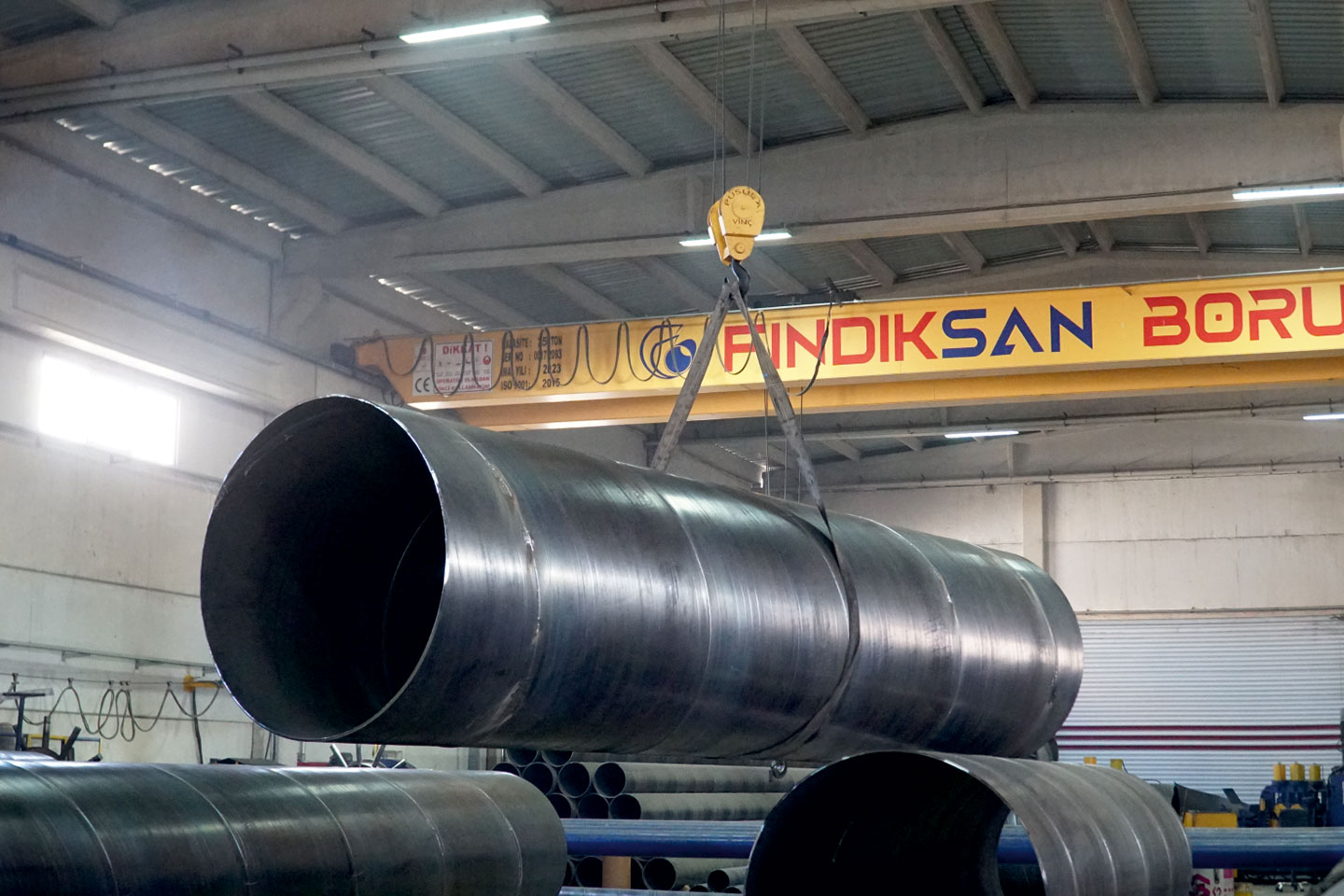
Spiral Welded Steel Pipes
Product Groups
Download E-Catalog
Download our e-catalog now to access the latest information about our products and services.
Spiral Welded Steel Pipes
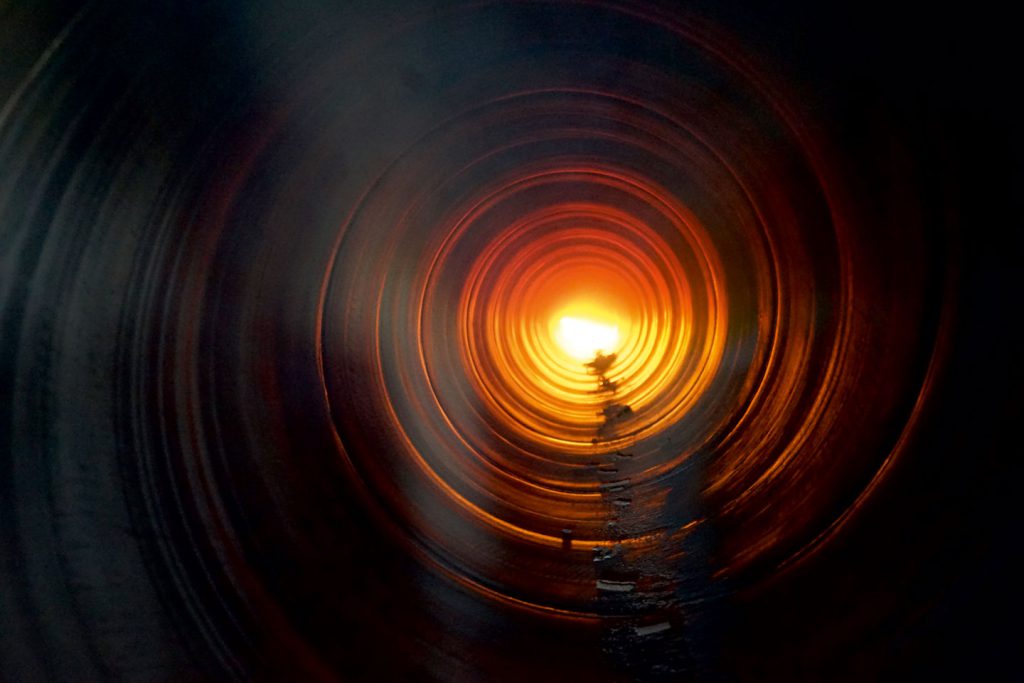
As FINDIKSAN BORU, we manufacture and supply spiral welded steel pipes using the HSAW (Helical Submerged Arc Welded) or SSAW method.
Production Method
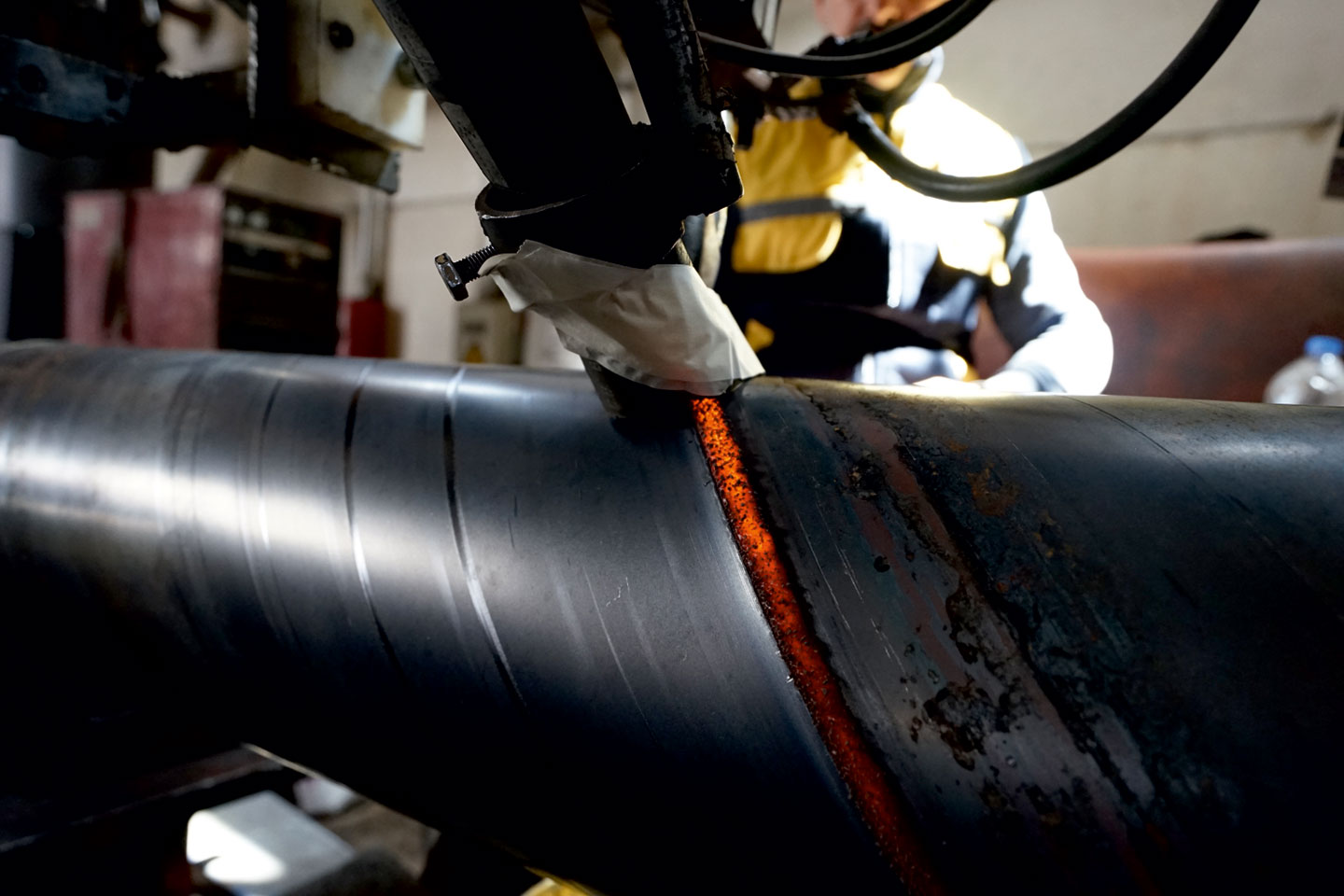
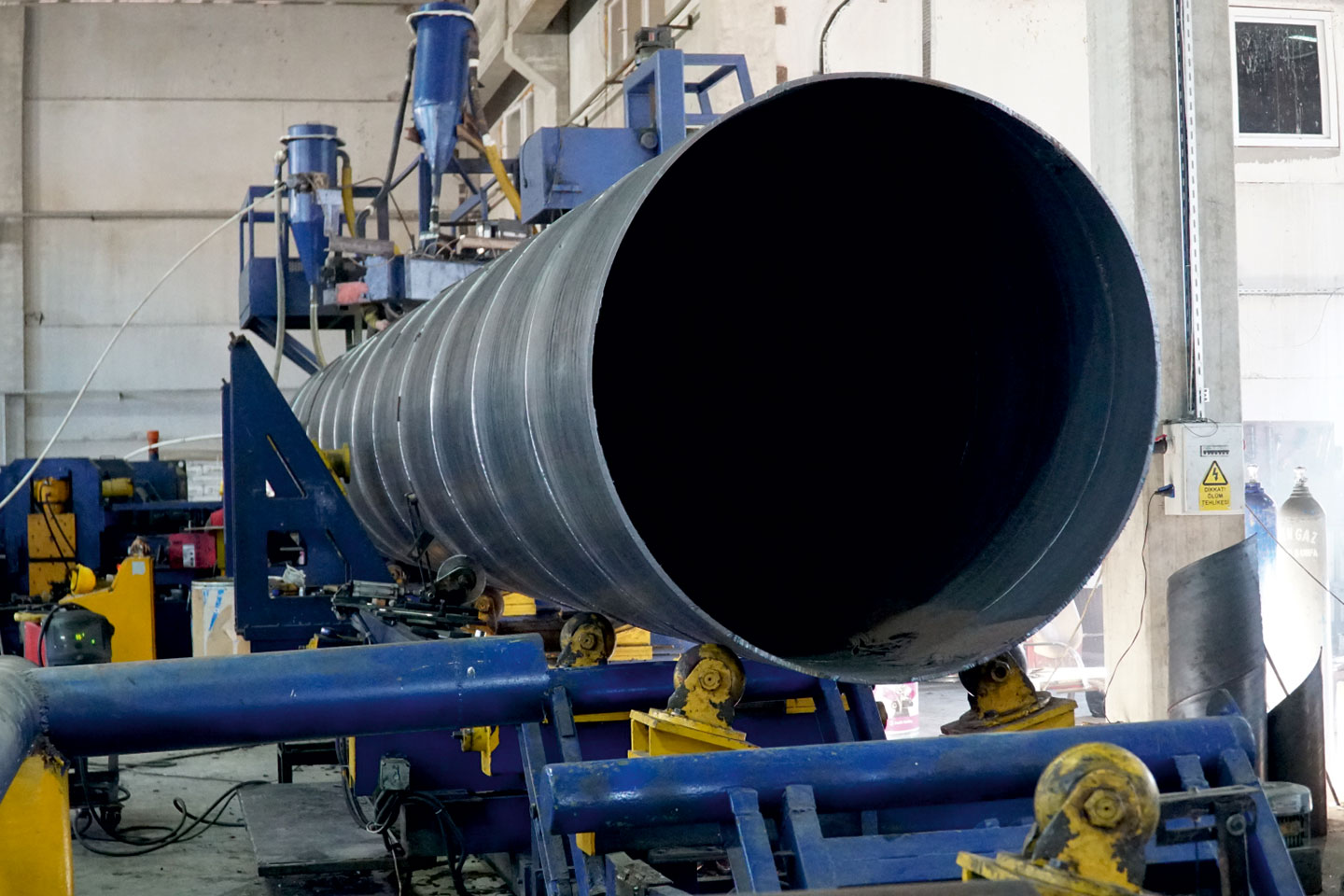
Spiral steel pipe manufacturing is the process of bending hot-rolled steel coils at a specific angle, winding them into a helical (spiral) form, and joining the seams using automatic welding methods. This method enables the economical production of large-diameter, high-pressure-resistant pipes.
Manufacturing Process Stages
Spiral steel pipe production consists of sequential automation steps requiring high precision:
| Stage | Description |
|---|---|
| Input Control and Uncoiling | Incoming steel coils (bobbins) are checked for mechanical and chemical test certificates, then flattened in uncoiling machines. |
| Edge Preparation (Milling) | Both edges of the steel sheet are cut with carbide milling units and prepared with appropriate bevels for a perfect weld joint. |
| Spiral Forming (Shaping) | The sheet is fed into forming rollers at a precisely calculated entry angle according to the pipe diameter to be produced, and bent helically. |
| Submerged Arc Welding (SAW) | The seam lines of the formed pipe are joined simultaneously from both inside and outside using automatic submerged arc welding (tandem technique). |
| Plasma Cutting | The continuously produced pipe is automatically cut to standard lengths required by the project (typically 6 to 18 meters) using plasma or mechanical saws. |
Coating Types
Pipes that have passed all destructive and non-destructive tests bare are cleaned of external contaminants such as rust, dust, mill scale, and oil on their surfaces before coating.
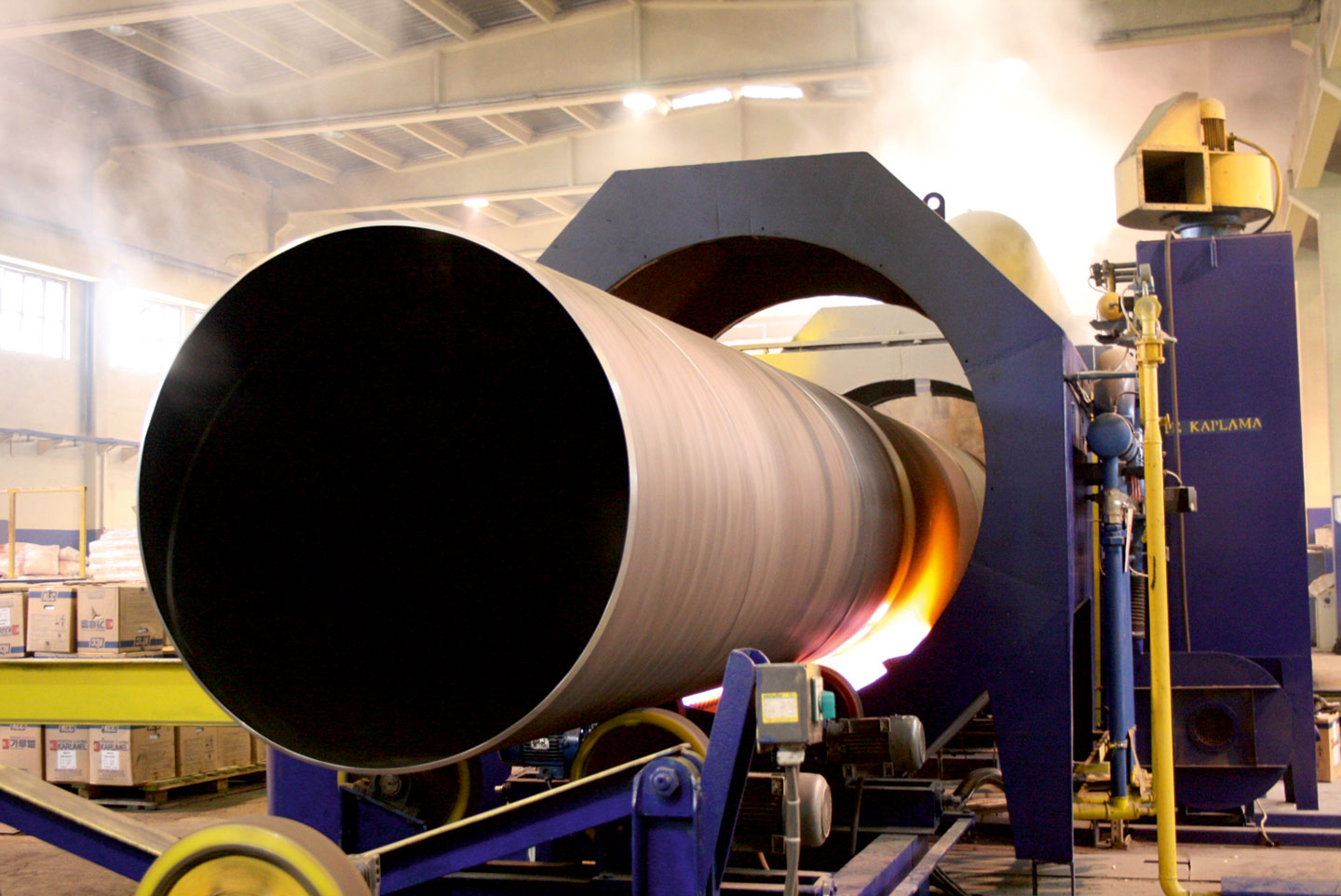
For this purpose, the inner and outer surfaces of the pipes are taken to the blasting line and blasted with steel grit in automatic machines to achieve Sa 2 1/2 – Sa3 quality in accordance with DIN 55928 or ISO 8501/01 standards. A surface roughness of 50-90 microns is achieved.
Internal and External Surface Preparation
Pipes that have passed all destructive and non-destructive tests bare are cleaned of external contaminants such as rust, dust, mill scale, and oil on their surfaces before coating.
For this purpose, the inner and outer surfaces of the pipes are taken to the blasting line and blasted with steel grit in automatic machines to achieve Sa 2 1/2 – Sa3 quality in accordance with DIN 55928 or ISO 8501/01 standards. A surface roughness of 50-90 microns is achieved.
Polypropylene Coating
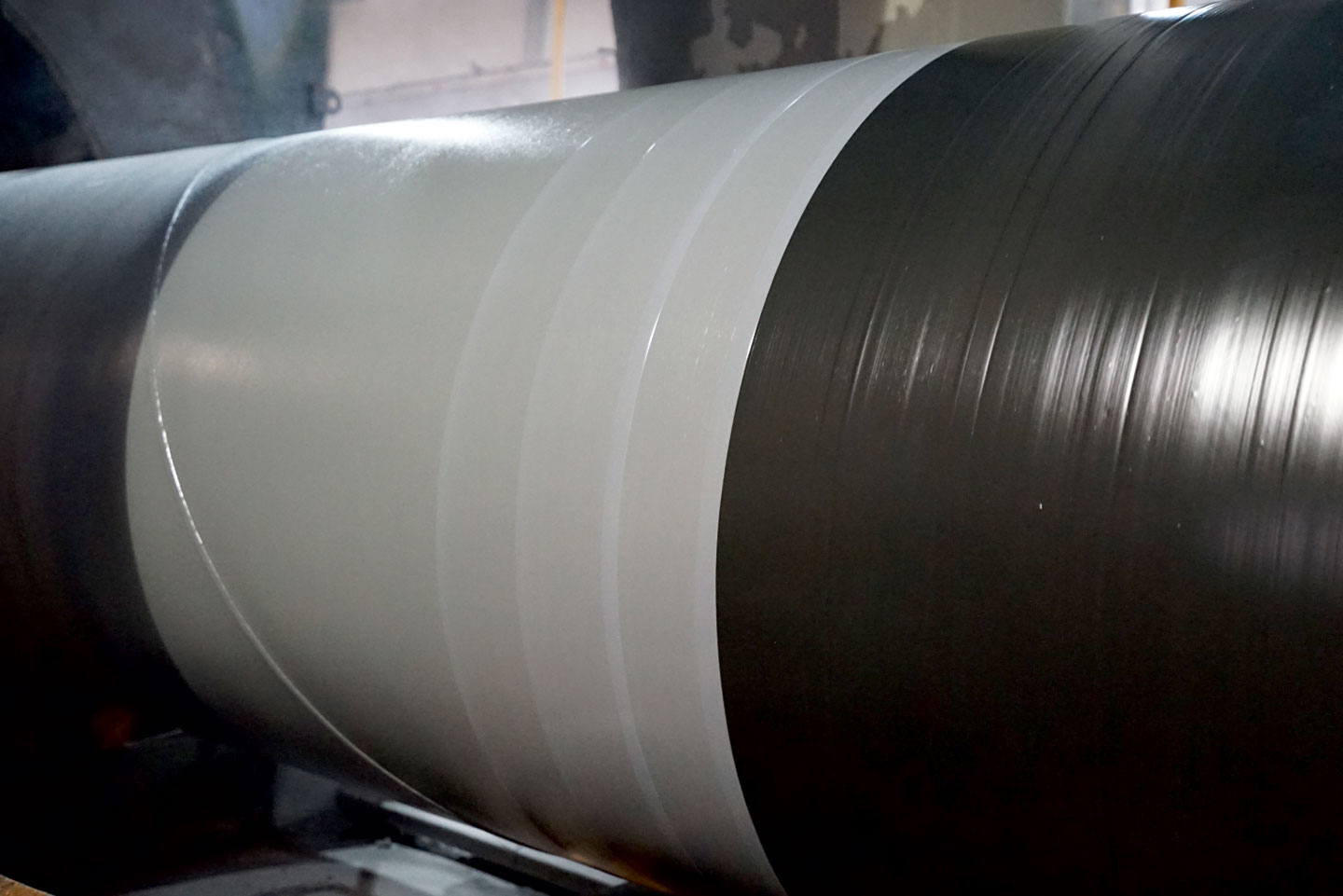
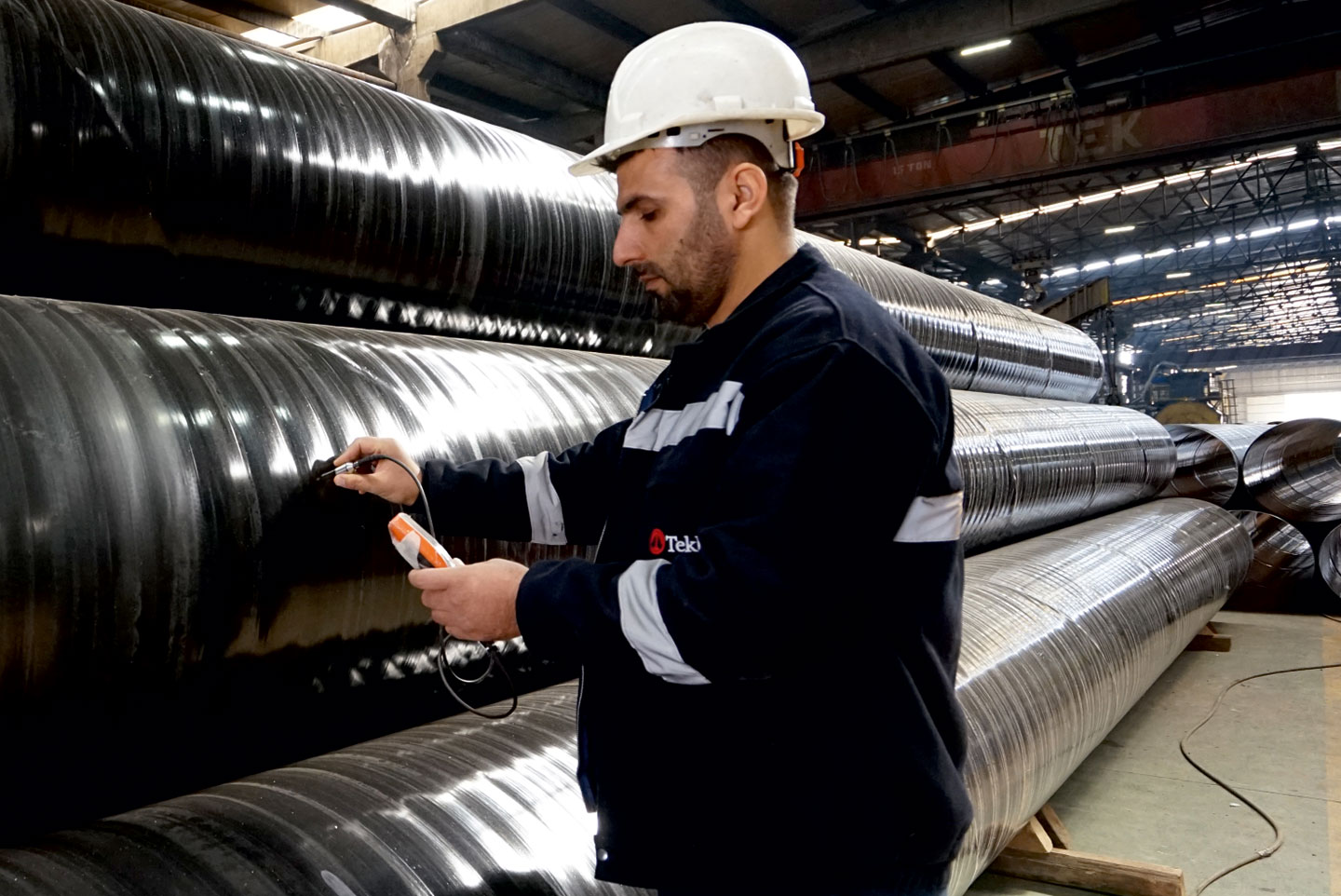
Pipes that have passed all destructive and non-destructive tests bare are cleaned of external contaminants such as rust, dust, mill scale, and oil on their surfaces before coating.
For this purpose, the inner and outer surfaces of the pipes are taken to the blasting line and blasted with steel grit in automatic machines to achieve Sa 2 1/2 – Sa3 quality in accordance with DIN 55928 or ISO 8501/01 standards. A surface roughness of 50-90 microns is achieved.
Standards Applied
Polyethylene
- TS 5139
- DIN 30670, NFA 49-710, TS 5139, UNI9099,
- EN 10288, TS EN ISO 21809-1
Polypropylene
- DIN 30678, NFA 49-711
Epocy Coating
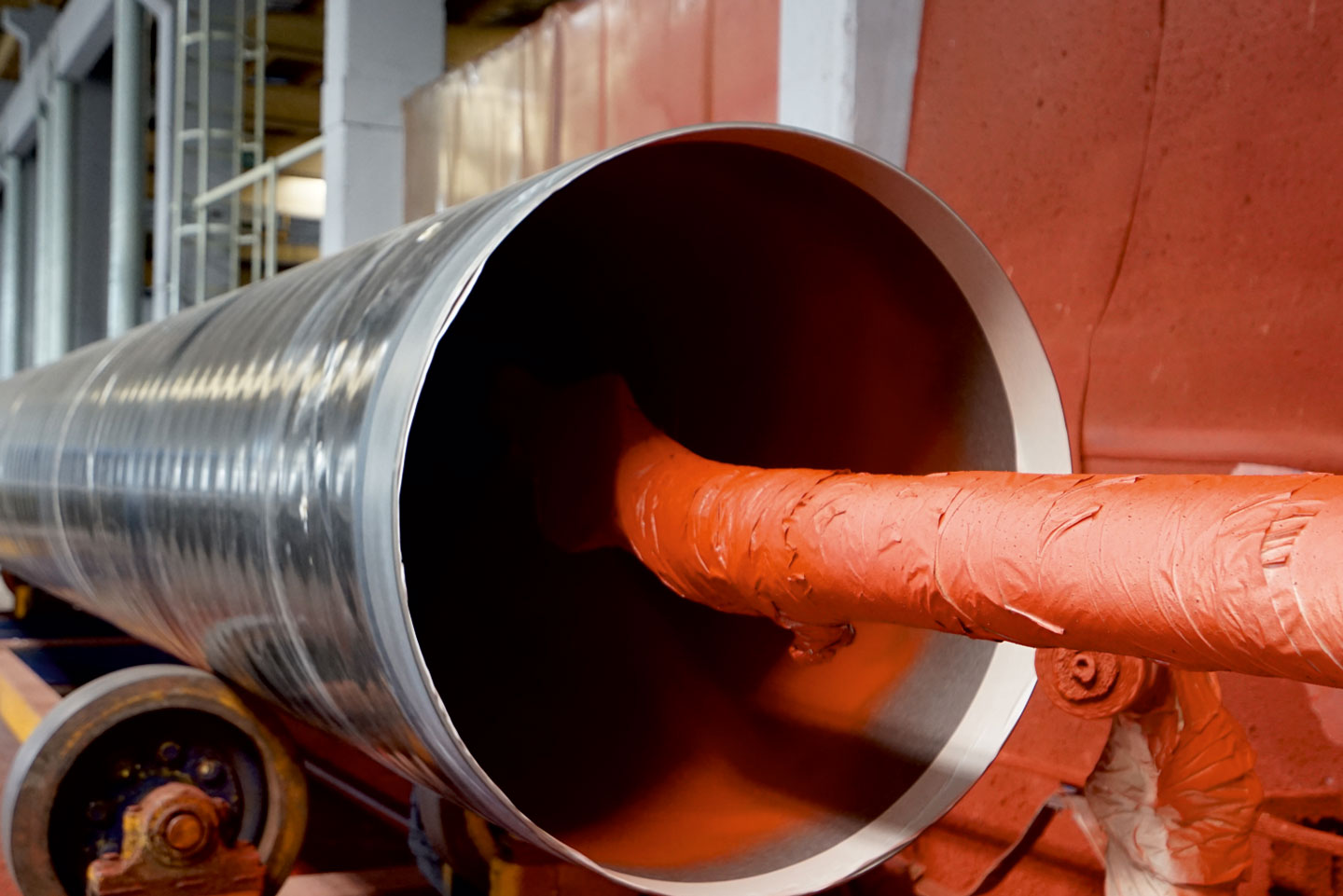
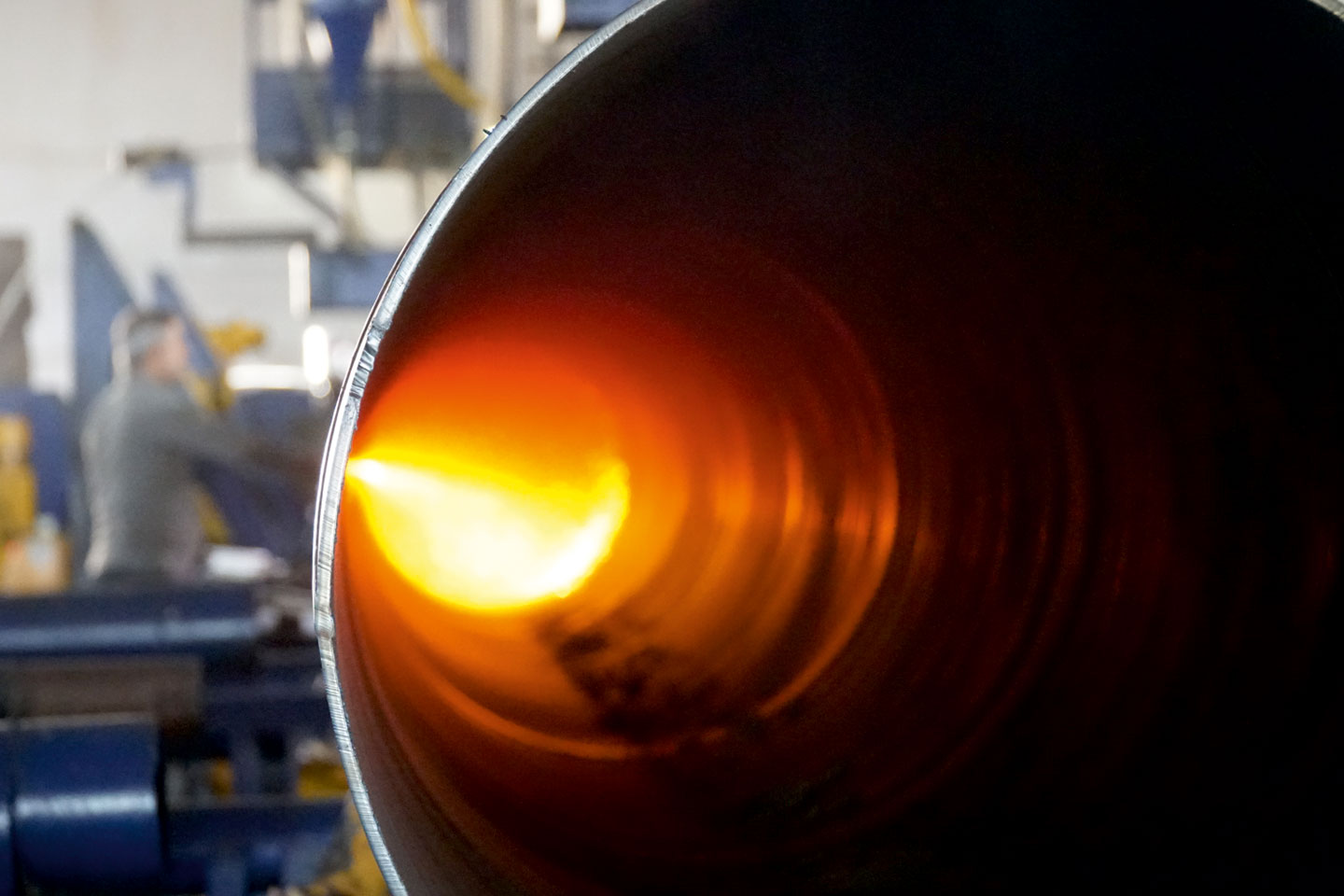
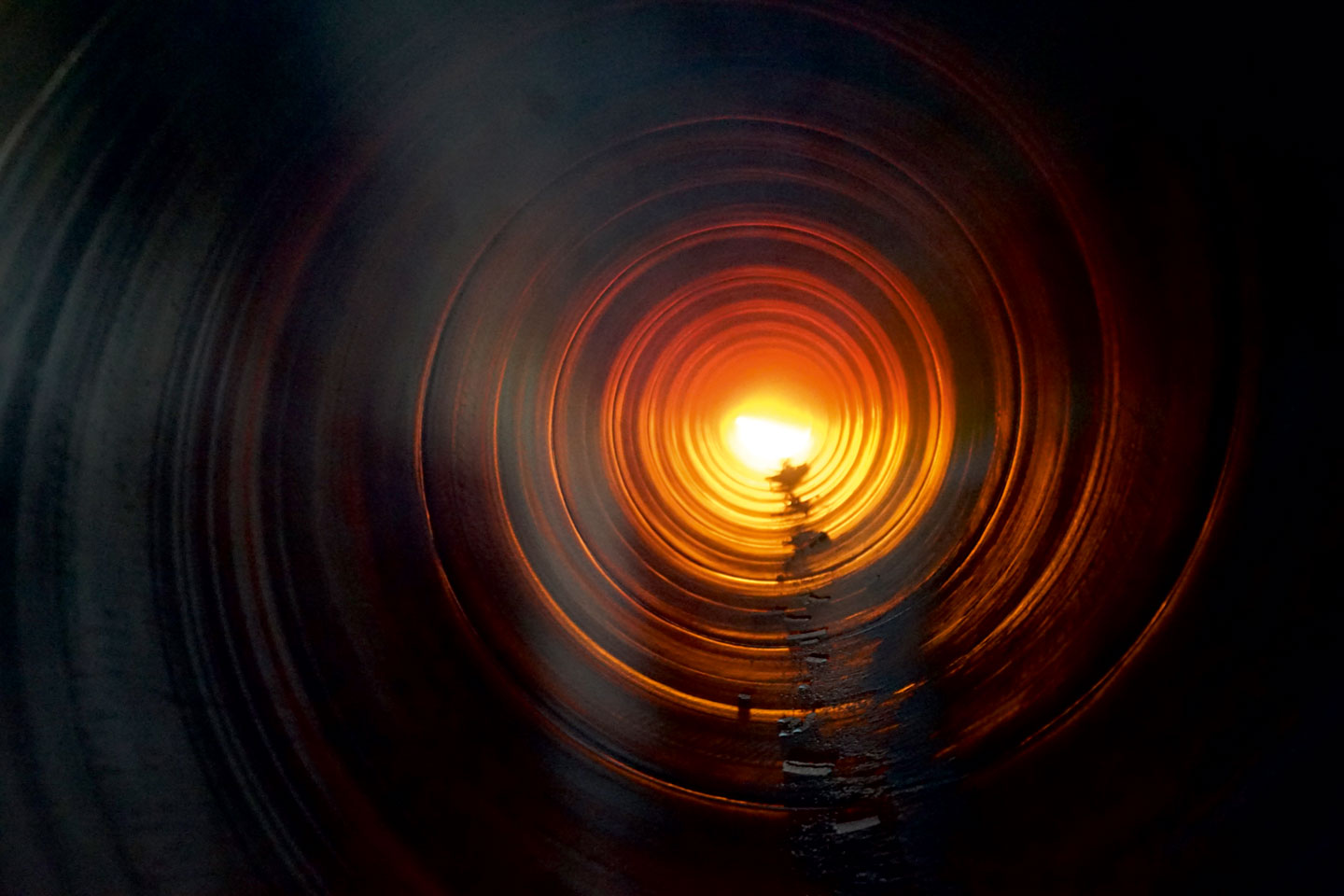
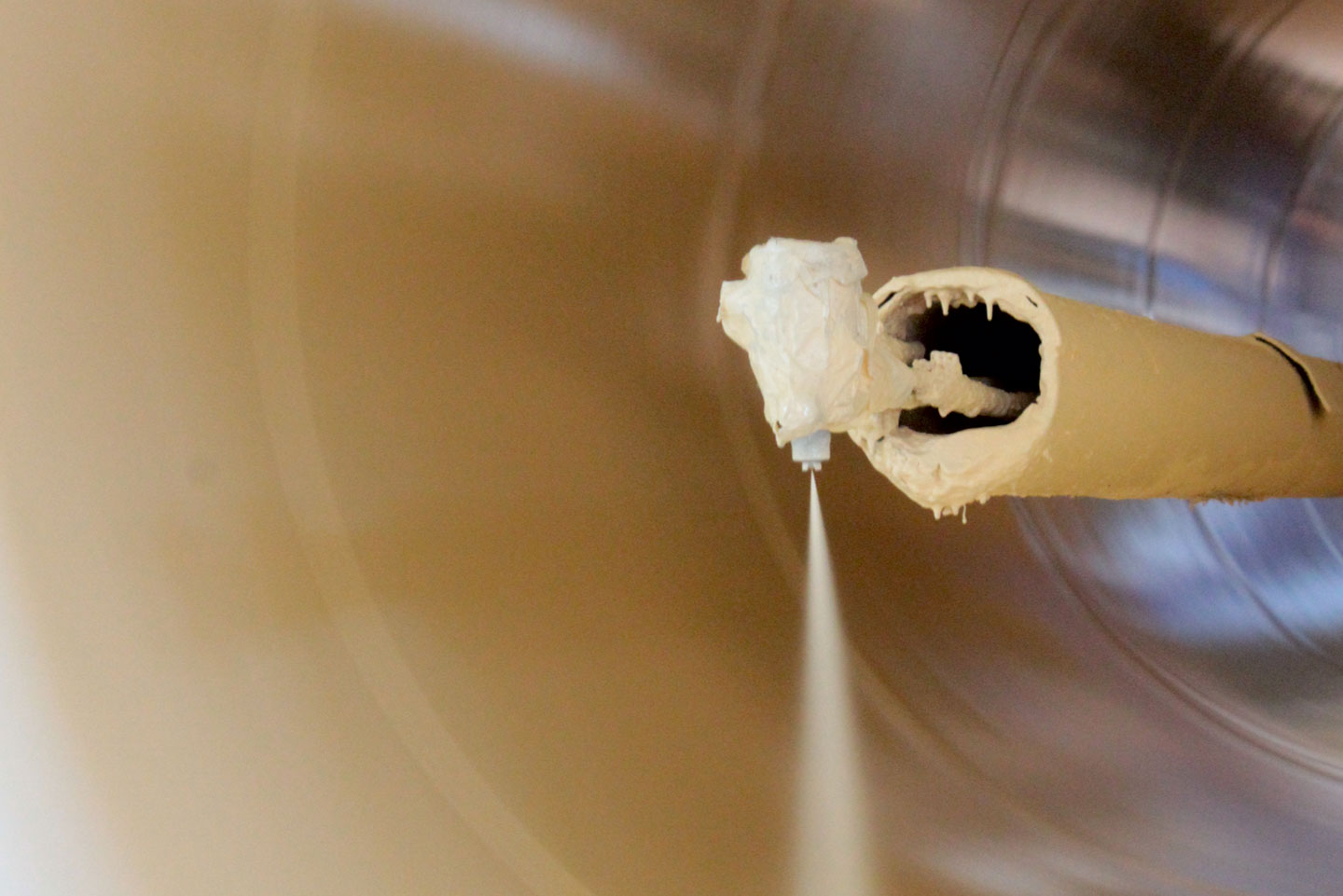
The blasted pipe is rotated around its own axis on automatic carriages at a set speed. At this stage, paint is sprayed by pumps into or onto the pipe through the forward-backward movement of a carriage perpendicular to the pipe’s rotation axis.
Typically, solvent-free epoxy is used as internal coating for drinking water projects.
Additionally, different paint applications such as coal-tar and polyurethane are applied upon customer request.
Standards Applied
Epoxy
- EN 10289, AWWA C-210, N FA 49-709
- EN 10339
Polyurethane
- AWWA C-222, EN 10290
Technical Advantages
- Large diameter production capability (219 mm – 3540 mm range)
- High pressure resistance
- Economical production cost
- Continuous and homogeneous weld quality
Application Areas
- Energy transmission lines (oil, natural gas)
- Water and wastewater transmission systems
- Infrastructure projects
- Industrial facility piping systems